Rolling bearings are used in many applications, and their operating conditions and environmental conditions are also very diverse. In addition, due to rapid technological development, requirements for bearings continue to increase.
Therefore, careful and comprehensive study of bearings is required in order to select the best option from thousands of different types and sizes. Usually, the bearing type is preliminarily selected with consideration of operating conditions, mounting arrangements, ease of installation on the machine, available space for bearing placement, cost, market availability, and other factors.
Then the bearing size is selected according to the required service life. At the same time, fatigue life, lubricant service life, noise, vibration, wear, and other factors must be considered. There is no strictly defined bearing selection procedure. It is necessary to analyze existing experience in similar bearing applications and research related to any special requirements directly connected with your application.
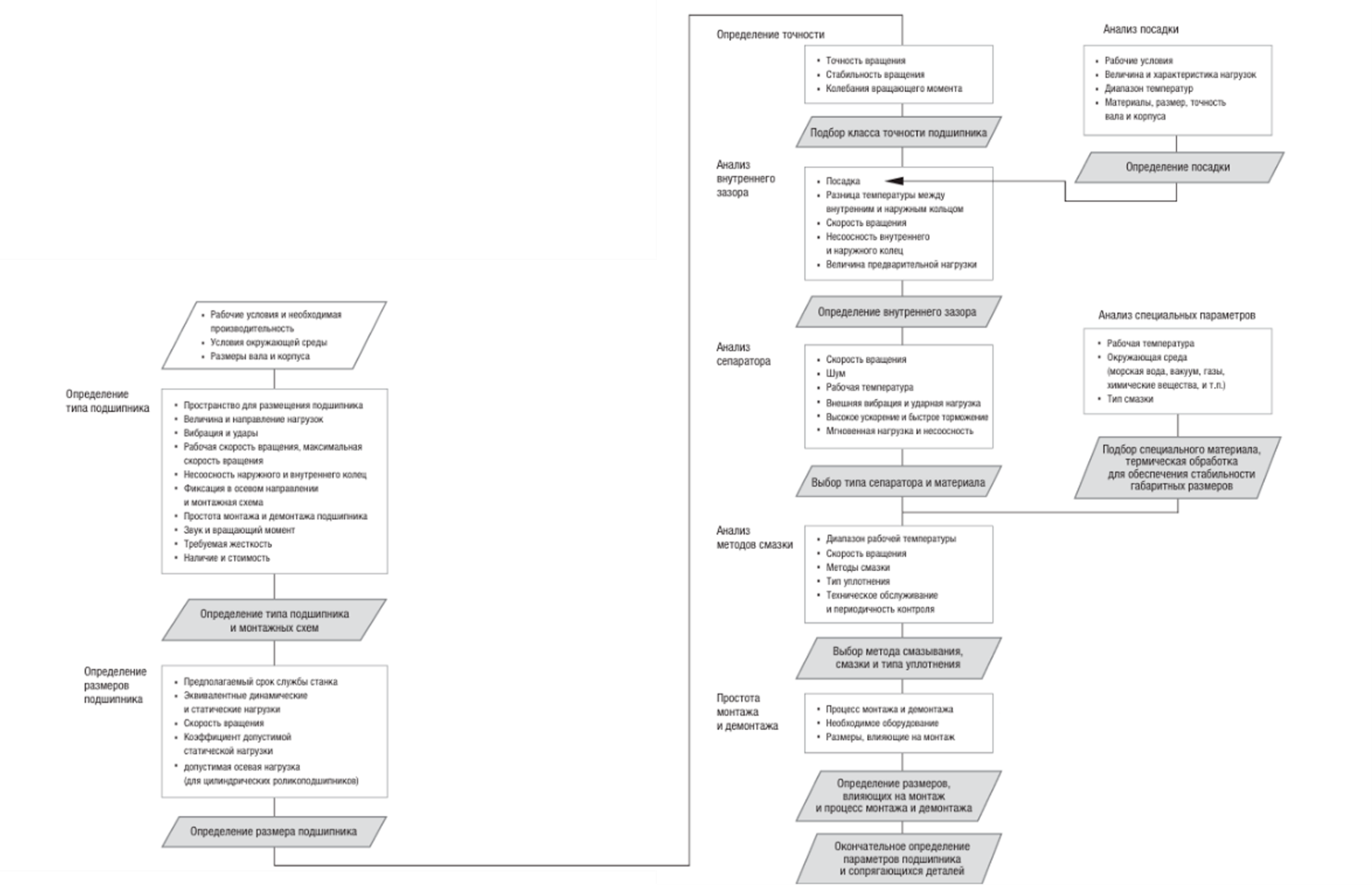
The diagram below (Figure 1) shows an example of the bearing selection process.